

Your organic traffic jumped 30% last month. Your vendor sent a celebratory email. Nobody asked the obvious question.
Where did it come from?
Most of the time, a traffic bump is exactly what it looks like: good work paying off. But sometimes it is the first visible symptom of something that will cost you dearly in six months. And in multifamily, where the person watching the dashboard is rarely the person building the links, it can happen without anyone on your team ever signing off on it.
This post is about that second scenario: black-hat SEO, how it shows up in your data, and how to tell the difference between a real win and a loan against your future rankings.
What “Black-Hat SEO” Actually Means
Black-hat SEO is any tactic that tries to trick search engines into ranking a site higher than its content earns. In practice, for apartment websites, it almost always comes down to one thing: manufactured backlinks.
Backlinks (other websites linking to yours) are one of the strongest signals Google uses to decide who ranks. Earn enough links from real, relevant sites and you climb. That is legitimate, and it is hard.
So some vendors skip the “earn” part and buy them in bulk instead. The most common source is a PBN (Private Blog Network). That is a cluster of low-quality websites built for one purpose: to sell links. A PBN operator writes one templated article, publishes a version of it across dozens of throwaway domains, and drops your link into each one. To a dashboard, it looks like your site suddenly got popular. To Google, it eventually looks like exactly what it is.
Why It Is a Worse Deal Than Ever in 2026
Here is the part vendors selling this stuff do not lead with. Google’s link enforcement has changed, and it makes black-hat backlinks a bad bet on both ends.
Most of the time, the links just do nothing. Since 2022, Google’s spam detection has been driven by SpamBrain, an AI system that identifies networks of low-quality domains and neutralizes their impact. Google now leans toward devaluing junk links rather than punishing the site outright. The March 2026 spam update rolled out in under a day. So the common outcome is simple: you paid for 500 links that quietly count for zero, while a competitor earned 50 real ones that actually move rankings.
When it does trigger a penalty, it hits hard and slow to recover. The less common but far more damaging outcome is an algorithmic demotion or a manual action. Sites that get hit can lose the majority of their organic traffic, and recovery takes months of cleanup, not days. You do not get to choose which outcome you get.
And there is a detail that matters specifically to multifamily: Google holds the site owner responsible for its link profile, even if a vendor built it. “Our marketing company did that, not us” is not a defense that restores your rankings. If it is pointing at your domain, it is your problem.
The Vanity-Metric Trap: When “Traffic Up” Hides “Business Down”
The trickiest part is that black-hat tactics can genuinely make a number go up for a while. That is what makes them tempting, and dangerous.
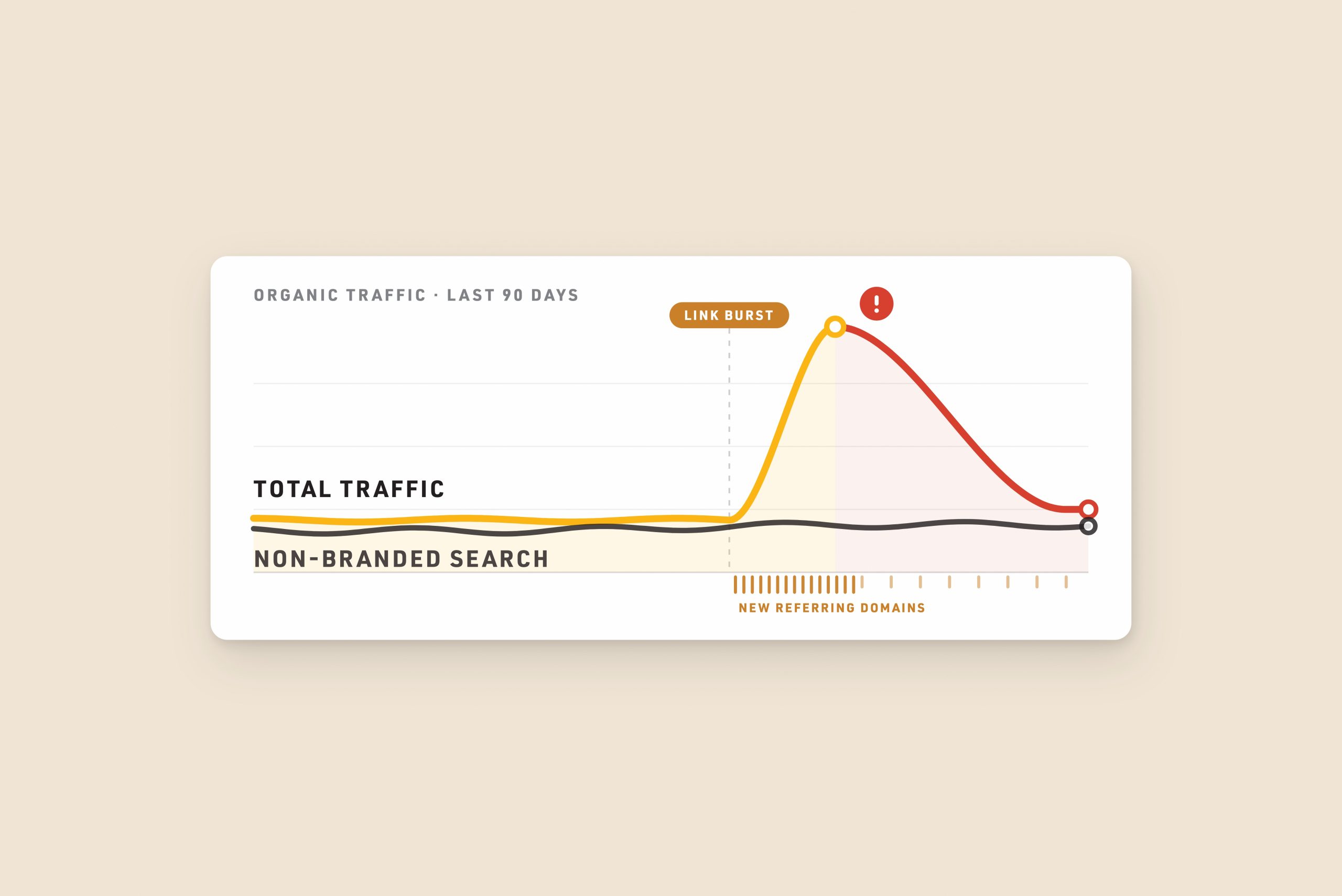
A backlink surge can lift a site’s authority just enough to pull in a wave of low-value traffic — visitors searching for a competitor’s name, or broad queries where the searcher was never really looking for your community. Total sessions rise. The leasing pipeline does not.
Meanwhile, the traffic that actually matters: people searching “2-bedroom apartments [your neighborhood]” with real intent to lease can be flat or falling underneath that headline number. If your report shows one big “organic traffic” line and nothing else, you would never know. The dashboard says success while the business quietly gets worse.
This is why the single most useful thing you can do is separate your traffic into branded (people searching for your community by name) and non-branded (people searching for what you offer). Non-branded, high-intent traffic is the real measure of SEO health. If total traffic is up but that bucket is down, treat it as a warning, not a win.
How to Read Your Own Backlink Profile
You do not need to be an SEO to run a basic gut check. If you have access to a tool like Ahrefs, SEMrush, or even Google Search Console, look for these patterns. Any one of them can be innocent. Several of them together, in the same short window, is a fingerprint.
- Referring domains jump sharply in a single month. A typical property earns a small handful of new referring domains a month from real sources — local news, neighborhood blogs, business directories. A sudden jump of dozens, with no PR campaign or news event to explain it, deserves scrutiny.
- The spam ratio climbs. Most tools flag low-quality referring domains. A normal site sits in the single digits to low teens. If a large share of your referring domains are flagged as spam, something is off.
- Traffic rises while your top keyword rankings fall. These normally move together. When they split apart — traffic up, hard-won rankings down — that divergence is a classic sign of authority being injected artificially rather than earned.
- The linking domains have telltale names. Real publishers are named after neighborhoods, cities, or topics. Bulk link sites often have “seo,” “rank,” “link,” or “backlink” right in the domain, or use novelty extensions like .shop, .click, or .website.
- The links come in a burst, then a drip. Organic links arrive at random. A sharp spike of many links in a few days, followed by a steady trickle for a few weeks, is the signature of a scheduled, paid campaign.
If you see this, do not panic and do not assume bad intent; unsolicited spam links land on innocent sites all the time. But do investigate, and do ask your vendor a direct question: where are these coming from?
Where to Find This in Each Tool
You do not need a subscription to every platform. Here is exactly where to look in the tools most teams already have:
- Ahrefs: Open Site Explorer, enter your domain, and click Referring domains in the left menu. You will see every domain linking to you, its Domain Rating, and when it first appeared. Sort by “first seen” to catch a recent surge.
- SEMrush: Go to Backlink Analytics, enter your domain, and open the Referring Domains tab. The separate Backlink Audit tool will also flag domains it considers toxic.
- Google Search Console (free, for sites you own): Click Links in the left menu, then look under External links → Top linking sites for the full list of domains pointing at you.
- Google Analytics 4 (referral traffic): Go to Reports → Acquisition → Traffic acquisition, then set the dimension to Session source/medium (or look at the Referral channel). This shows the sites actually sending you visitors.
One distinction worth understanding: the first three tools show who links to you. GA4 shows who actually drives people to your site. That gap is itself a tell. Bought backlinks usually show up as a wave of new linking domains in Ahrefs or Search Console with no matching referral visits in GA4 because those sites exist to pass link signals to Google, not to send you real renters.
The Vendor Questions That Matter
Because in multifamily, this is usually a vendor story. The warning signs of a vendor cutting corners are well known:
- Guaranteed rankings or “we’ll get you to page one” promises
- Secretive or vague link sources (“proprietary network,” no specifics)
- Results that appear unusually fast
- Reporting that shows only total traffic, never intent or source quality
- Pricing that seems too cheap for the volume of “links” promised
A vendor doing real work will happily tell you exactly where your links and traffic come from. A vendor doing black-hat work will not.
How Swifty Handles This
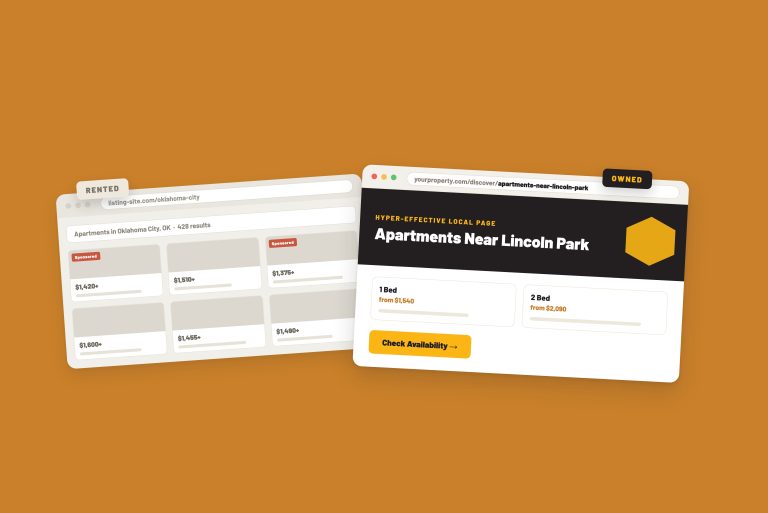
Swifty’s entire model is the opposite of the backlink shortcut. The philosophy is simple: own your traffic, don’t rent it — and don’t borrow it against your future, either. We build visibility that holds up because it is earned, not injected.
- H.E.L.P. (Hyper-Effective Local Pages) create genuinely useful, localized content that ranks because it answers what renters are actually searching for — no purchased links required.
- Google Business Profile optimization builds authority through the real signals Google trusts: complete profiles, reviews, and accurate local presence.
- Smart FAQs structure your content so search engines and AI tools can surface it, earning visibility through clarity, not tricks.
- SEARCH360 gives you a full read on your visibility across SEO, GEO, and AI search — including the kind of source-quality and traffic-intent breakdown that catches the vanity-metric trap before it costs you.
- Transparent reporting so you always know where your traffic comes from. If you cannot see the source, you cannot trust the number.

The Bottom Line
A traffic spike is not automatically good news. In multifamily SEO, the fastest results are often the most fragile and the ones most likely to be built on links you never agreed to and cannot defend. Real visibility is slower to build and nearly impossible to take away. Before you celebrate the next big jump in your dashboard, ask the one question that separates a win from a warning: where did this come from?
FAQs
Is buying backlinks illegal? No, it is not illegal but it violates Google’s spam policies, and Google holds your site responsible for it regardless of who bought the links. The risk is to your rankings and your business, not a legal one.
If my traffic went up, isn’t that good? Not necessarily. What matters is whether high-intent, non-branded traffic went up — the searches from people actually looking to lease. Total traffic can rise on low-value or competitor-brand searches that never convert. Always look under the headline number.
Can a vendor do this without telling me? Yes, and it is one of the most common ways it happens in multifamily. Because the person managing the dashboard is rarely the person building links, a vendor can run this playbook quietly. That is why source transparency in your reporting matters so much.
What do I do if I think it is happening to my site? Investigate before you react. Pull your referring domains, check the spam ratio and the patterns above, and ask your vendor directly where the links originate. Unsolicited spam is common and often harmless once devalued — the problem is a campaign you are paying for or being credited with.