


Budget season has a strange gravity. Last year’s numbers become this year’s starting point, every line renews on autopilot, and the only real question anyone asks is “up or down a few percent.” The waste survives because nobody audits the structure underneath it.
So before you lock your next marketing budget, look at where the money quietly leaks. It is rarely the line you would guess.
Why Budget Season Is the Best Time to Find Waste
Most marketing budgets are not decided. They are inherited. A line item gets added in a busy quarter, it renews the next year because cutting it feels risky, and three years later it is a permanent fixture that nobody can quite explain.
Renewal season is your one clean moment to question all of it. Not “can we afford this,” but “what is this actually buying, and do we keep anything when we stop paying?” That second question is where the real savings hide.
Five Line Items Worth a Second Look
- Paying twice for the same renter. You pay a listing platform for placement. Then you pay again, in ad budget or agency fees, to drive traffic to a site that often hands the renter right back to that same platform. That is the same prospect, billed twice, with the relationship ending up somewhere other than your community.
- Renting attention that resets to zero. Per-click and per-lead spend has a quiet catch: it compounds nothing. The month you pause it, the traffic stops as if it never happened. You are not building anything, you are renting attention by the hour, forever.
- The vendor pile. Count your marketing tools. A website from one vendor, SEO from another, ads from a third, a listing subscription, a reviews tool, a reporting add-on. Each bills you. Many overlap. Most are half used. You are paying for capability you never connected, which means you are paying for it twice: once for the tool, and again in the hours spent holding them together.
- Set-and-forget renewals. Every budget has a few line items that auto-renew because auditing them feels like more work than it is worth. Those are exactly the ones to open. A subscription that made sense two years ago is not automatically the best use of that dollar today.
- Reach with nowhere to land. The most common leak of all: paying for impressions and clicks that land on a generic homepage, or worse, back on a listing site. You bought the reach and gave away the destination. The spend does its job right up until the handoff, and then it spills.
The Fix Is Not Always “Cut.” It Is “Shift.”
None of this means slash the budget. Cutting good spend to hit a number is its own kind of waste. The move is to shift dollars from what you rent to what you own.
Rented spend buys a spike: a click, a lead, a placement that disappears the day the invoice stops. Owned spend buys an asset: a website, a set of local pages, a search presence that keeps earning traffic next quarter and the quarter after, with no additional cost per visit.
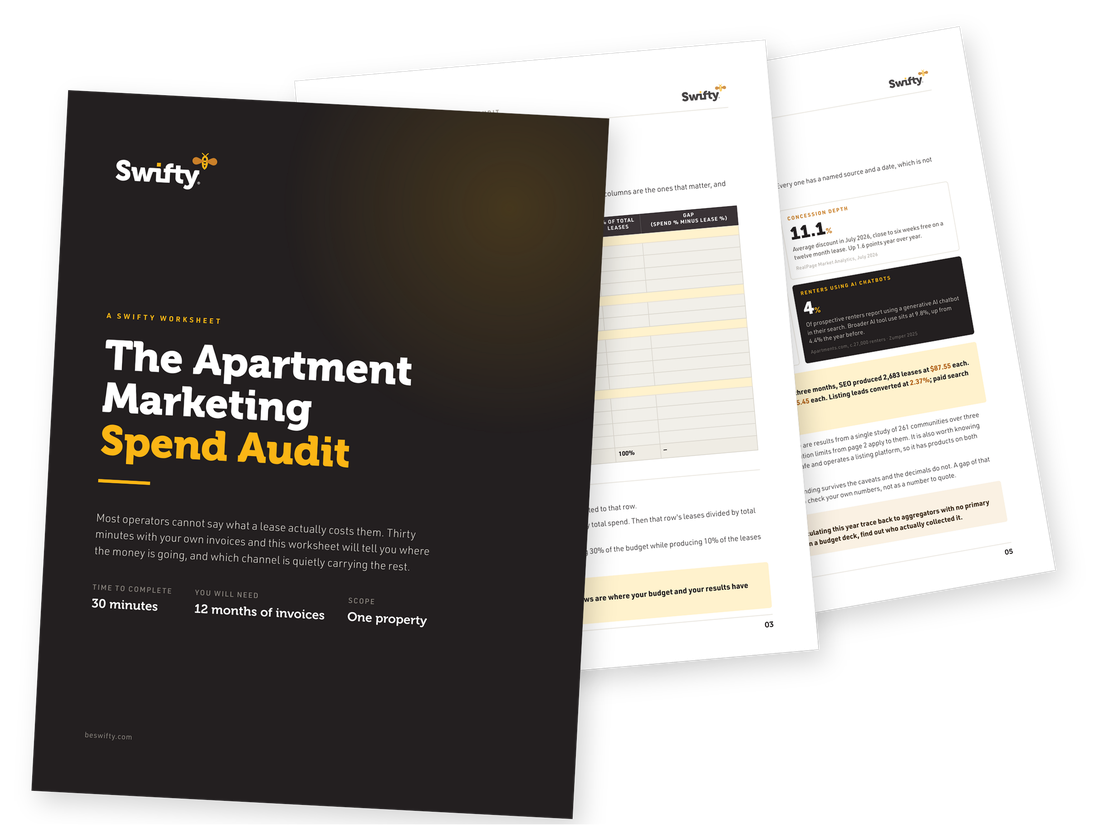
Run a Spend Audit Before You Renew
You cannot shift money you have not mapped. Before the next budget locks, run every marketing line through three quick questions:
- What does this actually buy? A placement, a click, a tool, a person’s time? Name it plainly.
- What do I keep if I stop paying? If the answer is “nothing,” you are renting.
- Does it compound? Does this dollar do more next month than it did this month, or does it reset to zero?
Any line that buys rented attention, keeps nothing, and compounds nothing is a candidate to shrink, and to move that money toward presence you own.
How Swifty Approaches This
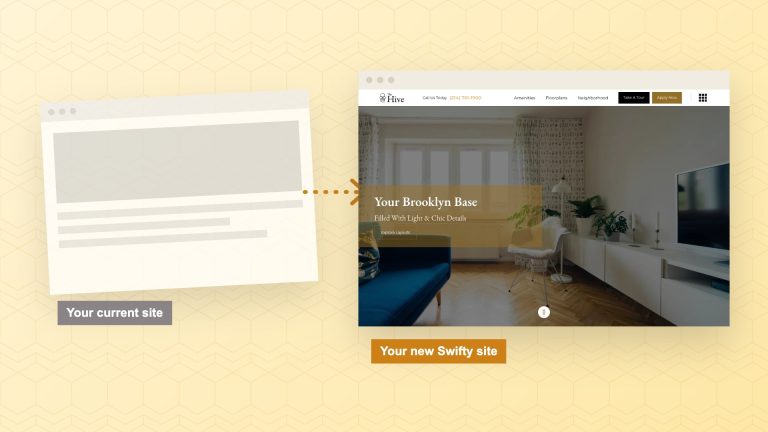
Swifty is built to move apartment communities from renting visibility to owning it: a website you own, plus Search360, our local search program.
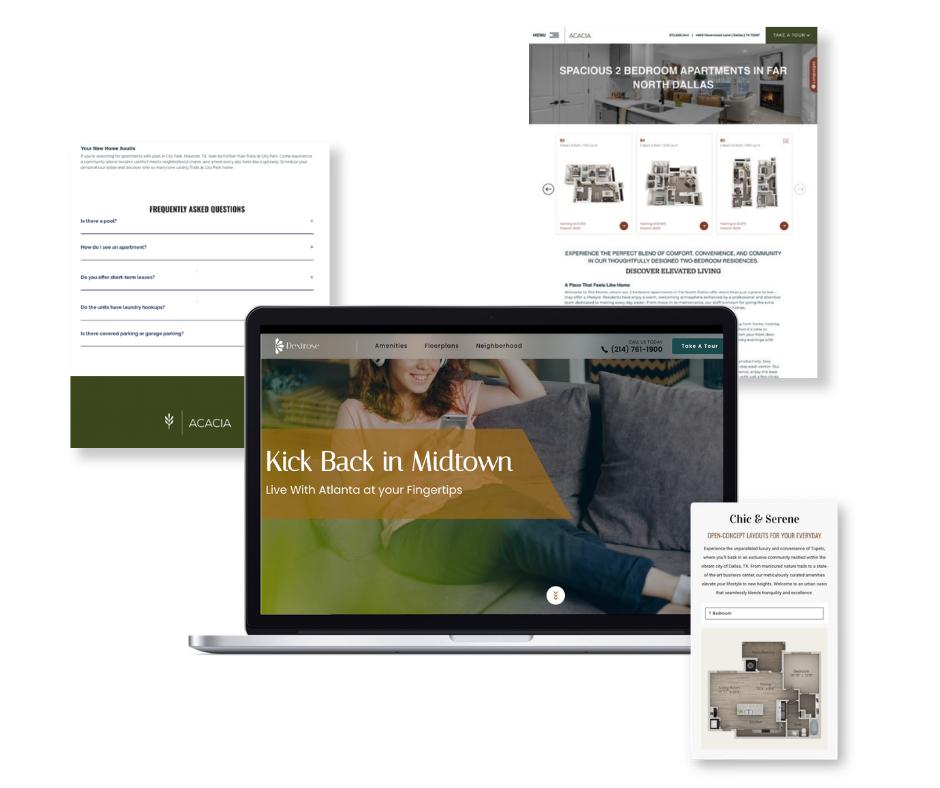
- A website you own, built to convert the traffic you already pay to attract instead of handing it back to a listing site.
- H.E.L.P. local pages that earn ongoing organic visibility, so more of your traffic arrives without a cost per click.
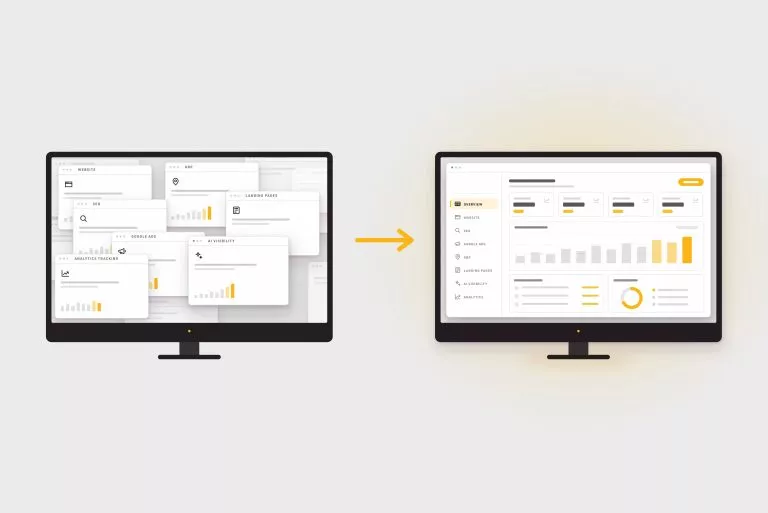
- One connected system, so you stop paying for a pile of tools that never talk, and start measuring against one honest number: cost per lease.
The point is not to spend less for its own sake. It is to make sure the dollars you do spend build something you keep.

The Bottom Line
The biggest marketing waste in multifamily is not a single overpriced line. It is a budget full of spend that buys attention and keeps nothing. Audit for what you own, shift dollars toward what compounds, and next year’s budget starts from a stronger place than this one did.
Want to see where your budget is leaking? Run a marketing spend audit and find out which of your line items are renting attention you never keep.
FAQ
What is the single most common overspend?
Reach with nowhere to land: paying for clicks and impressions that arrive on a generic page or a listing site, so the spend leaks at the handoff instead of converting.
Does “own your traffic” mean leaving paid channels?
No. Paid and listing channels can work well as an accelerant on top of a presence you own. The problem is using them as a substitute for one.
How do I know if a line item is worth keeping?
Ask what you keep if you stop paying. If the visibility, the pages, and the audience disappear with the vendor, you are renting, and that is the spend to reexamine first.
Related Blog Posts

The Buzz
Get Our Best Marketing Tips
New articles on multifamily marketing, search, and AI, straight to your inbox.