


A signed lease costs about $88 through SEO. Through an ILS, about $1,005.
That gap comes from Reach by RentCafe, which tracked 261 apartment communities over three months. Same properties, same window. SEO delivered 144% more leases at a cost per lease about 91% lower.
While this study is from March 2023, it points in the same direction the market has moved since. Yardi does own both Reach and RentCafe, so it has products on both sides of the comparison. Neither one closes a gap that wide, and ILS pricing has not come down since.
Why the Math Changed
For years, multifamily ILS spend was defensible because the alternative was slow and the budget was growing. Neither is true anymore.
These numbers frame every 2027 multifamily budget:
- Rent growth: 1.4%. Yardi Matrix’s August 2026 forecast for the year, against roughly 1% actual through mid-2026.
- Concessions: 11.1%. RealPage put the average discount at 11.1% of annual lease value in June 2026, the deepest in more than 25 years, or close to six weeks free on a twelve month lease. The share of stabilized units offering one peaked at 17% this spring and eased to 15.8% by July.
Read those together and the picture is blunt: revenue is flat, and you are already discounting to hold occupancy. The only line with real room left to move is what you pay to acquire a lease.
4 Ways to Lower Multifamily ILS Spend in 2027
#1. Build renter traffic you own, not rent.
The structural problem with a multifamily ILS is not the price. It is that you are leasing visibility. Stop the invoice and the visibility stops with it. Nothing compounds, and nothing stays behind.
Owned channels, like your property website, work the opposite way. Every page that ranks keeps ranking. Every review keeps sitting on your profile. The work you did in March is still producing in November.
Four things to build:
- Your Google Business Profile, used as a content channel
Most communities treat the profile as a static listing they filled out once. Used well, it is a publishing surface: regular local posts, current photos, timely review replies, accurate hours and pricing signals. Here is our full breakdown on getting GBP right. - Site speed & structure
Fast, mobile first, and organized around how renters actually phrase a search rather than how your brand book phrases an amenity. - Local pages that target real renter queries
City level content stopped competing years ago. What ranks now is specific: a neighborhood, a landmark, a price band, a lifestyle need. - Get new reviews, continuously
Volume and recency both feed local rankings, and they are the single strongest trust signal a renter sees before they ever reach your site.
These strategies work together to create searchable, sustainable visibility that isn’t tied to a monthly fee and that keeps growing over time.
#2. Target the searches renters actually type.
Renters do not open an ILS first. They open Google, and increasingly they type or say something closer to a sentence than a keyword:
- “1-bedroom apartment near Fort Worth Medical Center”
- “Pet-friendly apartments in East Austin under $1,600”
- “Quiet apartments near UNCW with covered parking”
These searches are low volume individually and enormous in aggregate. They are also the highest intent traffic in the funnel, because a renter who names a hospital, a price ceiling, and a pet policy has already decided most of what they want.
The community that appears for those searches captures that renter before the ILS comparison shopping ever starts.
And some of them are not searching at all.
A portion of renters now asks an assistant instead. Google’s Ask Maps returns apartment recommendations conversationally, inside Maps. ChatGPT and Perplexity will build a shortlist on request.
An Apartments.com survey of nearly 27,000 adults found 4% of renters using or planning to use an AI chatbot in their search. Zumper puts any AI tool use at 9.8%, up from 4.4% a year earlier. Both are small shares of renters, but the trend line is real.
It is worth attention anyway, because of where those answers come from. Assistants build them out of Google Business Profile content, your own site copy, and structured listing data. Ads now appear next to some AI answers, but they are labeled as sponsored. Being named in the answer itself still depends on the content you own.
#3. Judge every channel on cost per signed lease.
Underperforming ILS contracts survive renewal season for one reason: the number on the report is lead count, and lead count always looks respectable.
It is the wrong number. In 2023 data from 1,533 properties, REACH by RentCafe found PPC leads converted to leases at a much higher rate than ILS leads. A channel can deliver the most leads in your account and still be the most expensive lease you buy all year.
So change what you report on. Tie lease source in your CRM, then rank every channel by cost per signed lease and nothing else. The exercise usually pays for itself immediately, because it tends to surface one or two contracts that have been renewing on reputation for years.
#4. Shift budget deliberately, not all at once.
Nobody should cancel their ILS contracts in January. The goal is a transfer, not a cliff.
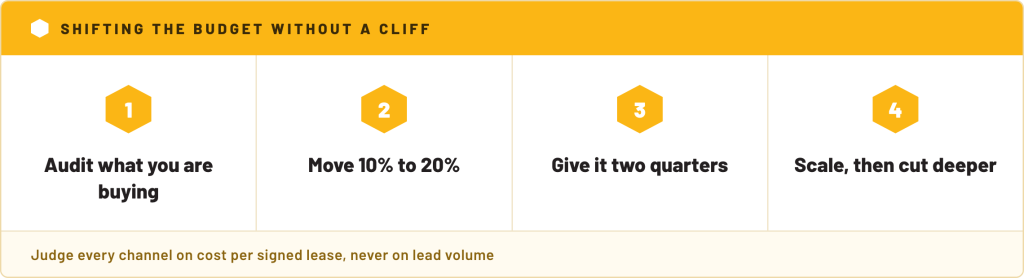
Here’s a breakdown of the four steps:
- Step 1: Audit what you’re actually buying.
Break performance out by platform, by property, by zip code. You will almost always find a tier carrying the account and a tier coasting on renewal inertia. - Step 2: Reallocate 10–20% of your ILS budget.
Pull it from the weakest performers first, not evenly across the board. Put it into owned search and Google Ads. - Step 3: Give it 2 quarters before you judge it.
Owned search lags. Listings switch on the day you pay; pages need time to rank. Reading results at 30 days is how good reallocations get reversed. - Step 4: Scale what works.
Owned traffic compounds. The second year of a reallocation could outperform the first, because pages built in year one keep working.
How Swifty Replaces ILS Top-of-Funnel Traffic
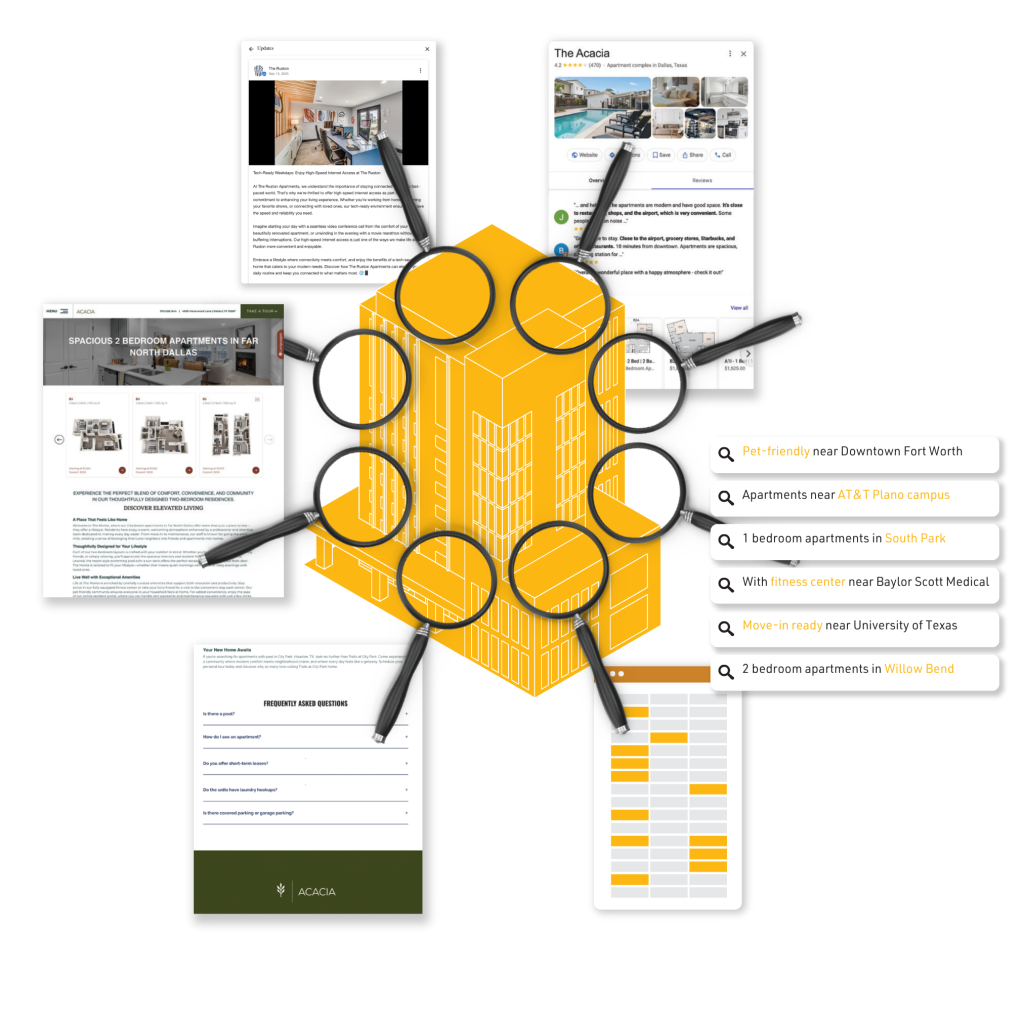
Search360 is Swifty’s complete SEO and AI visibility service for multifamily. One managed system, one outcome: your property owns local search in its submarket instead of renting a spot on someone else’s list.
You are not buying a stack of tactics to coordinate. You are buying the result. When someone in your market searches the way renters actually search, your community is what comes back, on Google, in Maps, and increasingly inside an AI answer.
What that means for the property:
- Coverage of the non-branded searches your submarket actually runs, on pages that live on your own domain
- Content that keeps working, regenerated as individual pages lose traction
- Long-form Google Business Profile posts published at least twice a week, linking back to your local pages
- Structured answers on your website that AI tools can read and cite
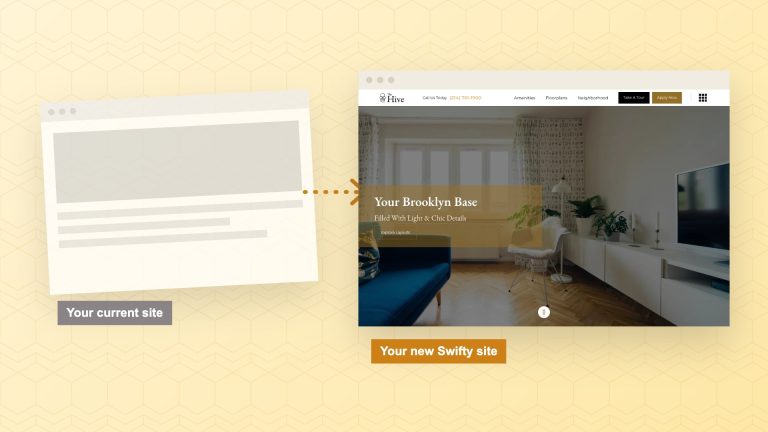
- Runs on the website you already have. No redesign, no migration.
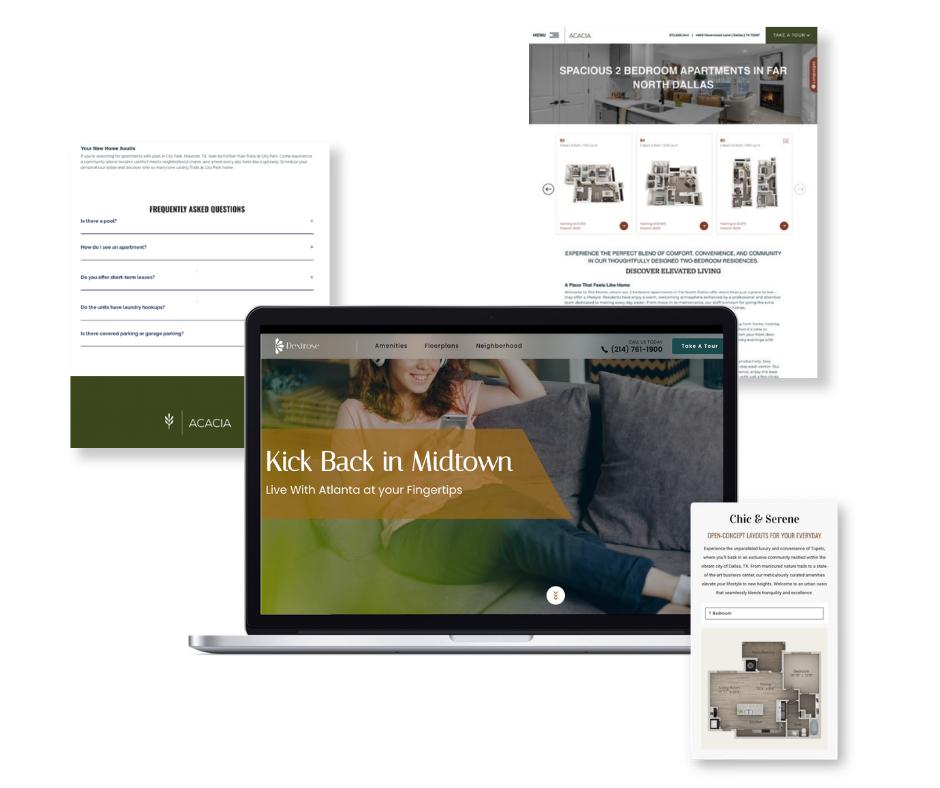
The pages themselves are Hyper-Effective Local Pages, built by Swifty’s proprietary AI content engine and human-reviewed, each targeting one specific renter search. They sit on your domain, so the traffic and the ranking authority stay with you rather than with a listing platform. If you also want current prices and availability in your Google Ads, that is PriceSync Pro, free with Swifty Google Ads management.
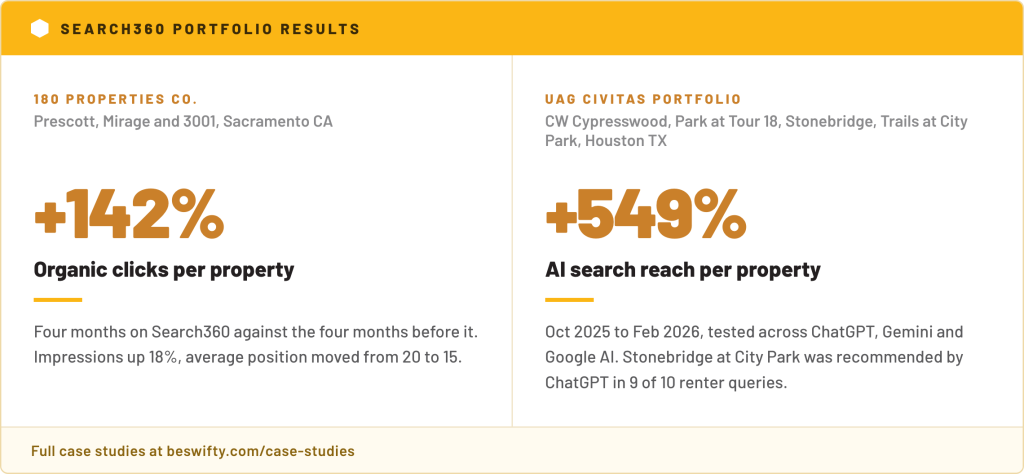
Both are portfolios rather than single properties, which is the harder test: the same system had to work across communities in different submarkets, not just at one lucky address. Full case studies here.
Search360 is priced per property and scaled by unit count. Talk with Swifty about current pricing, then set it against what you pay per signed lease on your ILS contracts and the payback question gets simple fast.

The Bottom Line
Reducing ILS spend is not about visibility. It is about who holds the asset.
Rent growth is flat and concessions are already in the budget. Acquisition cost is the one number still under your control. Every dollar you move from rented listings into search you own buys an asset that keeps working after the invoice stops.
Start with 10%. Measure to the lease. Let the results tell you how far to go.
FAQs
Should we drop our ILS contracts entirely?
Almost never, and not at once. Most communities land somewhere around a reduced ILS footprint on the platforms that genuinely produce, with the difference moved into search they own. The point is to stop treating the full spend as fixed.
How long before owned search replaces that traffic?
Local pages typically start showing movement in impressions within the first couple of months, with meaningful traffic gains building from there. It is slower than switching on a listing and it does not switch off when you stop paying.
We already have an SEO vendor. Is this the same thing?
Usually not. Traditional multifamily SEO tends to mean a handful of optimized site pages and a monthly report. Search360 is a continuous build: the local page footprint keeps expanding, pages are regenerated as they lose traction, and long-form posts are published to your Google Business Profile at least twice a week, linking back to your local pages.
Do we need a new website?
No. Search360 works with the site you have.
What about AI search? Should we budget for it separately?
Not necessarily. Ads now appear next to some AI answers, but being named in the answer itself still depends on having accurate, detailed content on your own domain and profile, which is the same investment that wins local search. More on how that actually works.
Related Blog Posts

The Buzz
Get Our Best Marketing Tips
New articles on multifamily marketing, search, and AI, straight to your inbox.