

Google used to reward big brands with big budgets. Now it’s rewarding profiles that people actually interact with.
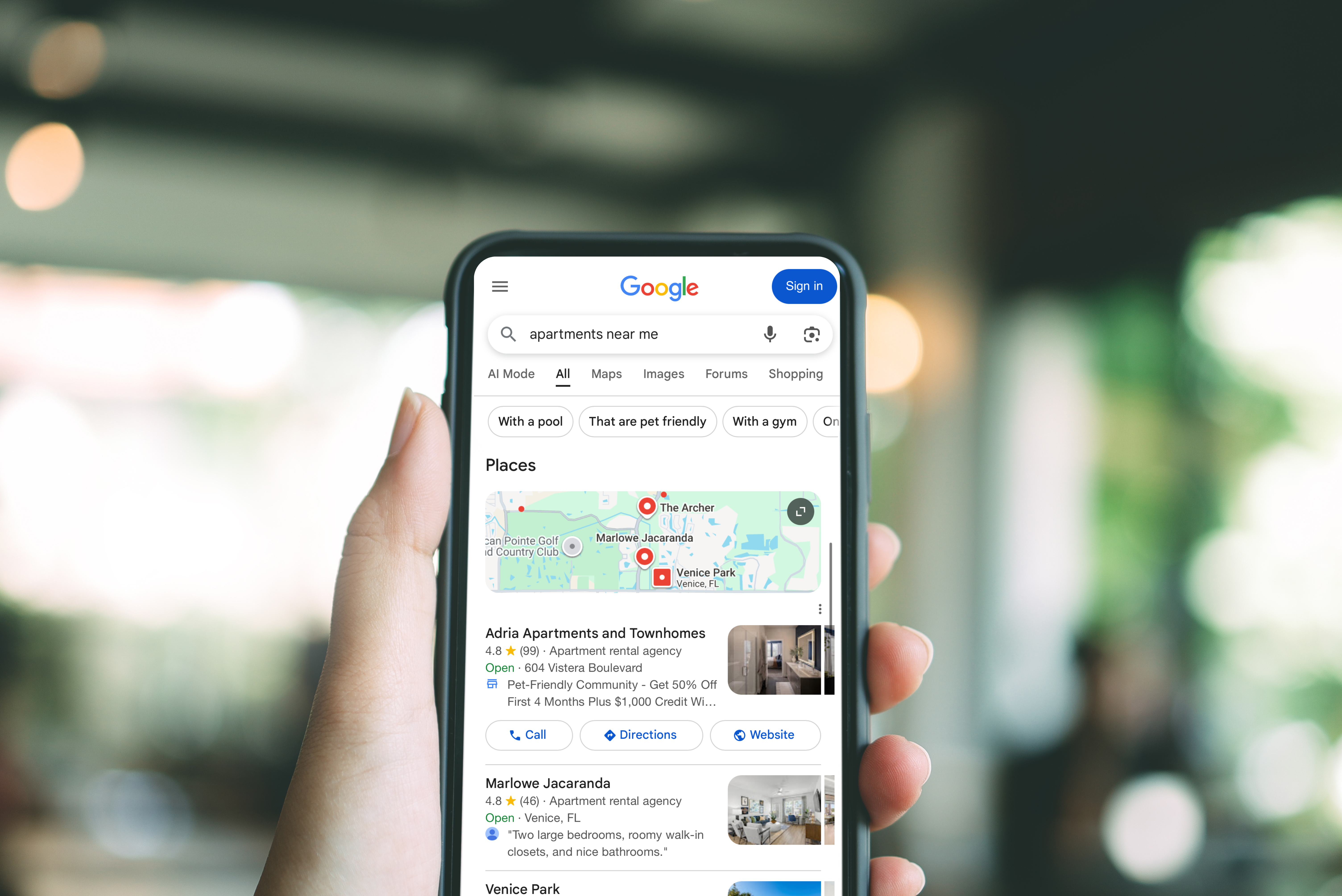
That’s not a subtle shift. For apartment marketers, it changes the playbook on how your property shows up in Google Maps, the Local Pack, and increasingly, in AI-generated search results.
What Actually Changed
Google’s local search algorithm has been quietly evolving throughout 2025 and into 2026, but the direction is now unmistakable: interaction prominence is replacing brand prominence as a primary ranking signal.
What does that mean in plain language? Google is watching what happens after someone sees your listing. Are they clicking your photos? Reading your reviews? Tapping “Call” or “Get Directions”? Spending time on your profile instead of bouncing back to the search results?
Those behaviors — clicks, calls, direction requests, dwell time, and engagement with posts and photos — are now weighted heavily in how Google decides which businesses appear in the Local Pack (Search Engine Journal). When two properties are similar in proximity and review count, Google resolves the tie using these behavioral signals.
The Whitespark 2026 Local Search Ranking Factors report confirmed the shift, noting that engagement signals — including click-through rate, post interactions, and booking clicks — are climbing fast as ranking factors. They also introduced an entirely new “AI Search Visibility” category for the first time, signaling that this isn’t just about Maps anymore.
Why This Matters for Apartment Communities
Here’s the uncomfortable truth: most apartment GBP listings were built to be “set it and forget it.” Upload some photos, fill in the address and hours, maybe respond to reviews when someone remembers.
That strategy used to be enough — especially if your management company had strong brand recognition. Google gave extra weight to well-known brands, which meant national operators could rank well on name alone.
Not anymore. Google’s shift to interaction-based prominence levels the playing field. A 120-unit independent community that publishes weekly posts, responds to every review, and keeps its photos fresh can now outrank a 400-unit property managed by a national brand that hasn’t touched its profile in six months.
The flip side? If your profile isn’t generating interactions, you’re actively losing ground — even if your listing looks “complete” on paper.
Three Signals Google Is Watching Right Now
1. Profile Click-Through Rate
When your listing appears in search results, what percentage of people actually click on it? A high CTR tells Google your profile is compelling. This is driven by your primary photo, star rating, review count, and whether your business hours show you’re open.
What to do: Audit your primary GBP photo. Is it the exterior of your building shot on a cloudy day in 2019? Replace it with a bright, inviting image of your best amenity or a staged unit interior. Make sure your hours are accurate — being open when users search is now the No. 5 local pack ranking factor (BrightLocal).
2. On-Profile Engagement
Once someone lands on your profile, Google tracks whether they scroll through photos, read Q&A, view your posts, or click through to your website. Dwell time and interaction depth are reinforcement signals — the more time people spend, the more Google trusts your listing.
What to do: Give people a reason to linger. Post weekly updates — leasing specials, community events, neighborhood highlights. Upload new photos monthly. Answer every question in your Q&A section. Each interaction is a data point Google uses to rank you.
3. Conversion Actions
Calls, direction requests, website clicks, and booking clicks are the strongest engagement signals. They represent real-world intent, and Google weighs them accordingly.
What to do: Make sure your phone number is correct and clickable. Enable the “Book Online” or appointment link if your leasing office supports it. Add your website URL and verify it’s not broken. These sound basic, but a 2026 GBP audit by Search Engine Land found that missing or broken conversion links are still one of the most common issues.
The Floor Plan “Products” Problem
There’s another change apartment marketers need to prepare for — and this one could catch a lot of teams without a GBP management partner off guard.
Many multifamily marketers have been using the GBP Products tab to showcase floor plans. It’s been an effective workaround: upload your 1BR, 2BR, and 3BR layouts as “products” with pricing and descriptions, and they show up prominently on your profile.
The problem? Google’s Products feature was never designed for a multifamily. Google Merchant Center’s terms of service explicitly prohibit listing “real property” — which includes apartments. The floor-plan-as-product hack has been tolerated, not endorsed.
Now there are growing signals in the multifamily marketing community — including discussions at the Multifamily Strategic Marketing Summit — that Google may start enforcing this restriction and removing floor plans from the Products tab.
No official announcement yet. But if your GBP strategy depends on Products to display floor plans and pricing, you need a backup plan now — not after the feature disappears.
What to do instead:
- Shift floor plan visuals to your photo gallery. Upload high-quality floor plan images with descriptive file names and captions. Photos are a core GBP feature that isn’t going anywhere.
- Use GBP Posts to highlight availability. A weekly post like “Our 2BR/2BA — 1,050 sq ft starting at $1,450 — is our most popular layout this spring” drives engagement and communicates pricing.
- Make sure your website is the floor plan hub. Your property site should have a dedicated, SEO-optimized floor plans page that Google can crawl and serve in organic results. When renters click through from your GBP, that’s where the full experience lives.
How Swifty Handles This
Swifty’s GBP Management service is designed to adapt to shifts like this — helping ensure your profile stays active, relevant, and ready for how renters are searching today.
Here’s what Swifty does for the communities we manage:
- Weekly GBP posting with property-specific content — leasing updates, community highlights, and neighborhood features that drive real engagement
- Photo and visual strategy that keeps your gallery fresh, relevant, and optimized for the interactions Google now measures
- Review response management so every review gets a timely, authentic reply — a direct engagement signal
- Profile health monitoring to catch broken links, outdated hours, and missing conversion features before they cost you rankings
- AI visibility optimization through Search360 — ensuring your property’s structured data feeds the AI search systems that are increasingly pulling from GBP as their primary source
This isn’t just about keeping your profile “updated.” It’s about treating your GBP as an active marketing channel — one that Google is now explicitly rewarding with higher rankings.

The Bottom Line
Google isn’t asking whether your profile exists anymore. It’s asking whether anyone cares about it.
The shift from brand prominence to interaction prominence means the properties that invest in active, engaging Google Business Profiles will outrank the ones coasting on name recognition. And with floor plan Products potentially on the chopping block, now is the time to make sure your visibility isn’t built on borrowed features.
Own your profile. Own the engagement. Own your traffic.
FAQs: Google Business Profile for Multifamily
Does this mean reviews don’t matter anymore? Reviews still matter — a lot. But Google is now looking beyond star ratings to review freshness, response rate, and what reviewers actually say. A property with 200 reviews and zero responses will rank below one with 80 reviews where the team replies to every single one.
How often should I post on my GBP? At minimum, weekly. Google tracks posting cadence as a relevance signal. Each post is also an opportunity for searchers to interact with your profile, which feeds the engagement loop that now drives rankings.
Should I remove my floor plans from the Products tab right now? Not necessarily — there’s no confirmed enforcement date. But start building redundancy: get those floor plans into your photo gallery, your website, and your posts. If Products goes away tomorrow, you should already have alternatives in place.
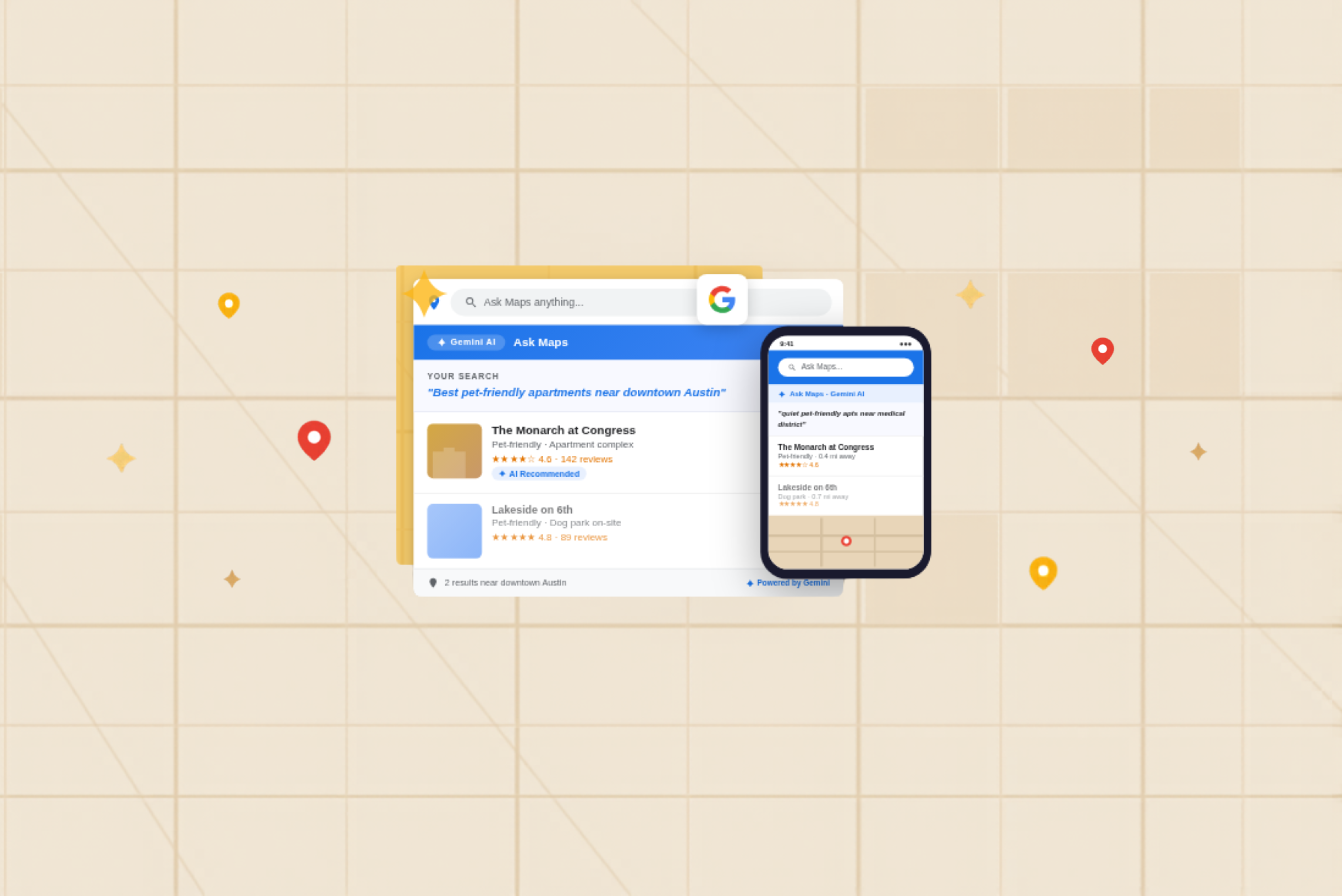
What’s the connection between GBP and AI search? Google’s AI Overviews and Ask Maps features pull heavily from GBP data. According to Google’s own content hierarchy, it draws from your GBP first, then reviews, then your website. An active, well-optimized profile doesn’t just help you rank in Maps — it positions you to appear in AI-driven search results too.