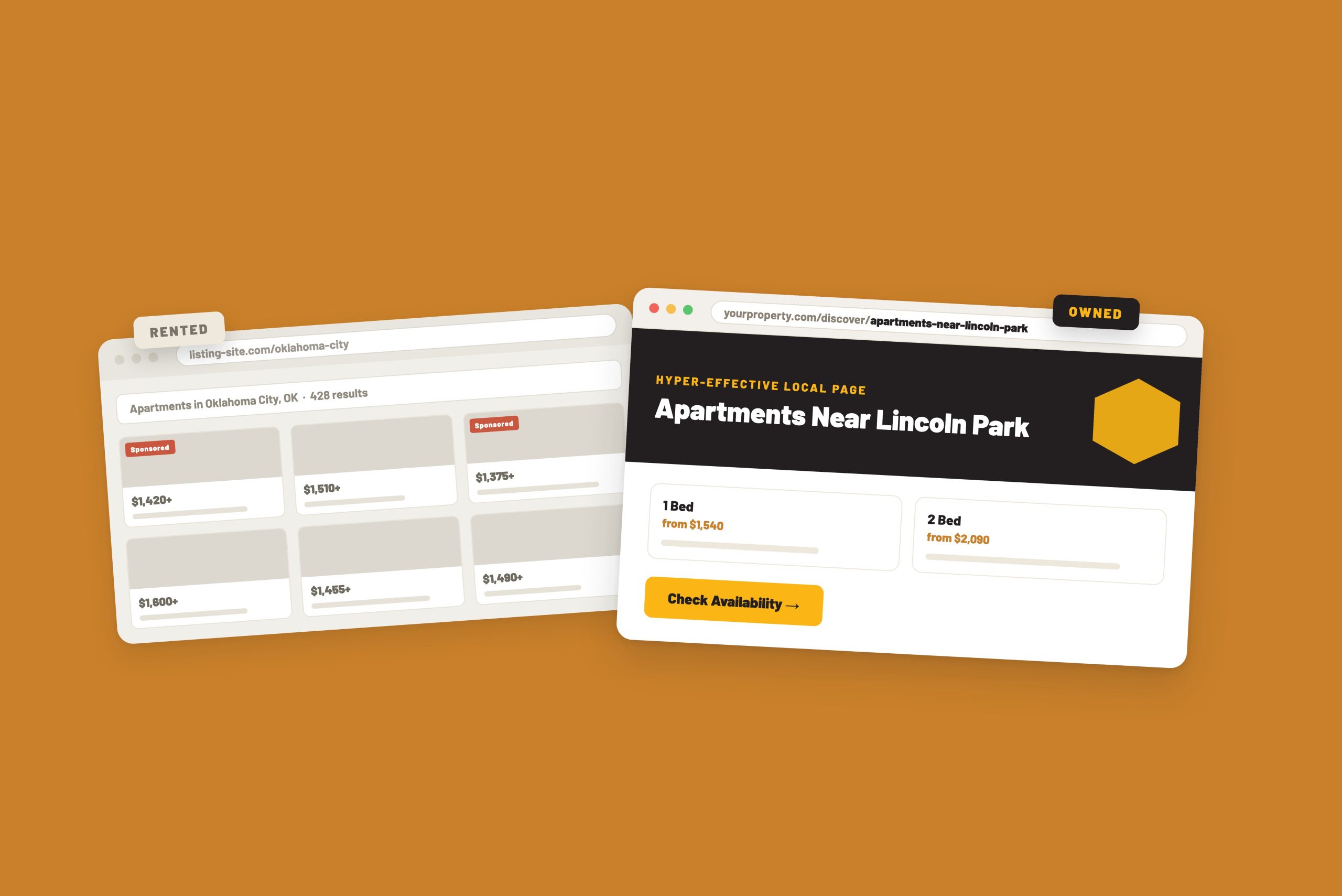


Buying a lead is renting a renter. You pay for the introduction, and the moment your budget runs out, the introduction stops.
That is the quiet math behind a shift happening across multifamily right now. Communities are looking at what they spend on listing platforms, comparing it to what those platforms actually deliver, and deciding to build something they own instead.
The something they own is a H.E.L.P. page. And the difference between the two approaches is not small.
The Real Cost of a Bought Lease
Start with the number most operators do not want to say out loud. The national average cost per lease from an ILS is roughly $588 (Yardi/RentCafe). In competitive markets, it climbs well past that.
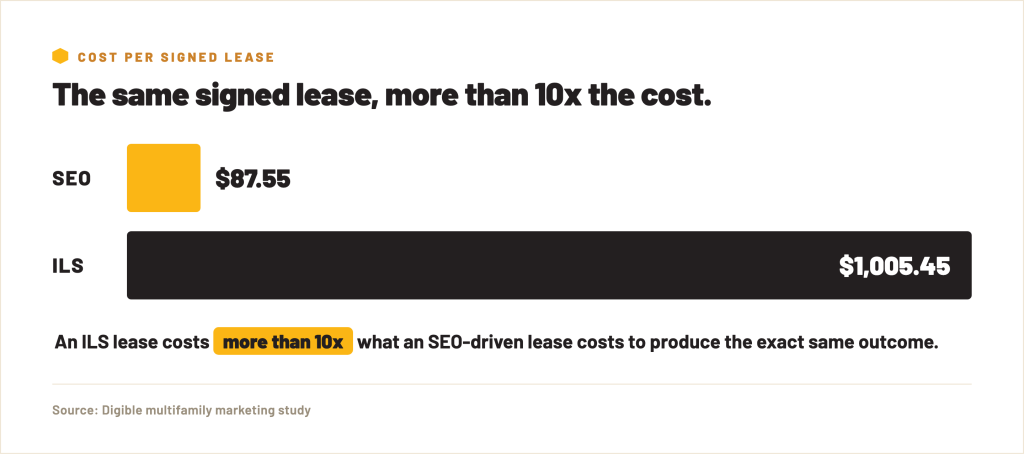
Now put it next to the alternative. In one multifamily marketing study, SEO drove 2,683 leases at $87.55 per lease. Over the same period, ILS platforms drove 1,100 leases at $1,005.45 per lease (Digible). That is not a rounding difference. That is one channel costing more than ten times another to produce the same outcome: a signed lease.
Here is the part that stings. When you pay an ILS, you are not buying an asset. You are buying a month of access. Stop paying in November and your December pipeline resets to zero. You never built anything. You rented attention and gave it back.

What a H.E.L.P. Page Actually Is
H.E.L.P. stands for Hyper-Effective Local Pages, Swifty’s answer to local apartment search. Here is the plain version: a H.E.L.P. page is a purpose-built page Swifty creates on your own website, engineered to answer the specific things renters search for in your specific area, so that you show up when they look. It is not a page you throw together in your CMS. it is structured, from the ground up, to rank.
Not a generic “Welcome to our community” page. Something sharper. A page built around how people actually search:
- “pet-friendly apartments near [neighborhood]”
- “2 bedroom apartments with a home office in [city]”
- “apartments near [employer or hospital or university]”
- “what is it like living in [neighborhood]”
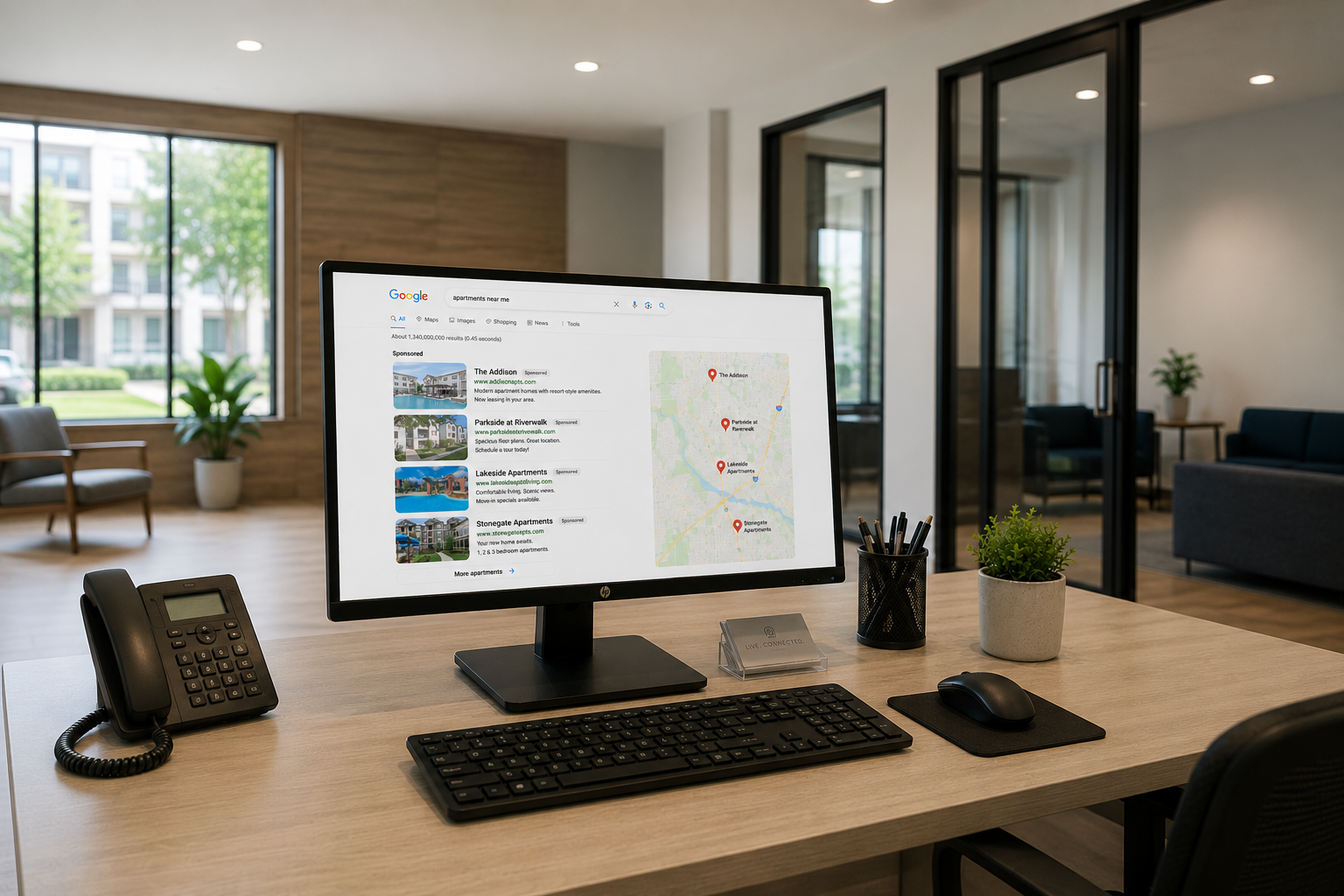
Renters are not typing your property name into Google. They do not know your property name yet. They are searching by neighborhood, by commute, by lifestyle, by budget. A H.E.L.P. page meets them at that exact moment, on a page you control, and pulls them toward your website instead of a listing site’s.
The listing platform captured that same search years ago. The difference is they rent it back to you every month. A H.E.L.P. page captures it once and keeps it.
Why This Matters More in 2026 Than It Did Last Year
Two shifts made owned local content go from “nice to have” to “the whole game.”
First, search stopped sending as much free traffic downstream. Over 64% of Google searches now end without a click to any website, and on mobile that number is above 77%. Renters get their answer right on the results page, in the map pack, in an AI summary. If you are not the source that answer is built from, you are invisible, no matter how much you spend elsewhere.
Second, AI search reads the same signals traditional search does. There is a myth that AI tools are a separate universe you need a separate strategy for. They are not, at least not yet. Google’s own 2026 guidance confirmed that the fundamentals that get your site ranking in traditional search are the same signals AI platforms use when they surface information for renters. Ask Maps, Google’s Gemini-powered conversational search inside Google Maps, launched in the U.S. in March 2026 and pulls from exactly this kind of structured local content. Learn more about this update here.
Translation: a well-built H.E.L.P. page does double duty. It ranks in traditional search and it feeds the AI answers renters increasingly rely on. A listing you pay for does neither on your behalf.

The Math That Makes Managers Switch
You do not have to abandon ILS platforms to see the point. Look at where leases are actually coming from. Community websites, Google Business Profiles, and Google Ads together accounted for 83% of leases signed in recent multifamily data. The owned and direct channels are already doing the heavy lifting. The listing platforms are the expensive supplement, not the engine. And you do not have to cut them cold to feel the difference; here’s where to trim Your ILS spend first.
So the question is not “ILS or nothing.” It is “why am I pouring the biggest share of my budget into the channel that produces the fewest leases per dollar?”
H.E.L.P. pages flip the ratio. Each one is a small, permanent piece of your website that keeps working after you have moved your attention elsewhere. A set of them across the searches that matter in your market becomes a lead engine that does not send you an invoice every month.

How Swifty Handles This
H.E.L.P. pages are Swifty’s core product, because owning your traffic starts with owning the content that earns it. Here is how a build works for a community:
- We map the real searches in your market. Not guesses. The actual neighborhood, lifestyle, and intent-driven queries renters use near your property, and where you are currently invisible for them.
- We build the pages on your website. The traffic and the asset stay yours. There is no platform to keep paying to hold your place.
- We structure them for search and AI. Clean local signals, Smart FAQs, and content built the way both Google and AI tools expect, so one page works across traditional search, the map pack, and AI summaries.
- We tie it to your Google Business Profile. Your H.E.L.P. pages and your GBP reinforce each other, strengthening your presence in the local results renters check first.
- We measure against cost per lease. The whole point is to move leases off the $1,000 channel and onto the $90 one over time.
H.E.L.P. is one piece of a bigger system. Search360 is Swifty’s all-in-one search solution, and it runs on two core components: H.E.L.P. pages and Google Business Profile optimization, tied together by a shared keyword strategy and Smart FAQs. H.E.L.P. captures the long-tail, high-intent searches and drives them to your site. GBP optimization anchors you in Google Maps and the local pack (more on that here). The keyword strategy and Smart FAQs keep the language consistent across both, right down to the AI answers. One system, not a stack of monthly rentals.

The Bottom Line
Buying more leads treats a symptom. It fills units this month and leaves you exactly as dependent, and exactly as exposed, next month. Building H.E.L.P. pages treats the cause. It turns renter search into an asset you own, that compounds, and that keeps working long after the invoice would have come due.
The communities pulling ahead in 2026 are not the ones spending the most on leads. They are the ones who stopped renting their traffic and started owning it.
FAQs
Do H.E.L.P. pages mean I should cancel my ILS listings? Not necessarily, and not all at once. The smart move is to build owned traffic that steadily lowers how many leases you need to buy, so you can scale ILS spend down as your cost per lease drops instead of cutting cold.
How long before a H.E.L.P. page starts working? Owned content builds over weeks, not overnight, which is exactly why it is an asset. Unlike a paid listing that stops the day you stop paying, a H.E.L.P. page keeps ranking and earning traffic long after it is built.
Will these pages help me show up in AI search tools? Yes. AI platforms pull from the same structured local content that ranks in traditional search. A well-built H.E.L.P. page is one of the strongest ways to become a source those AI answers are built from.
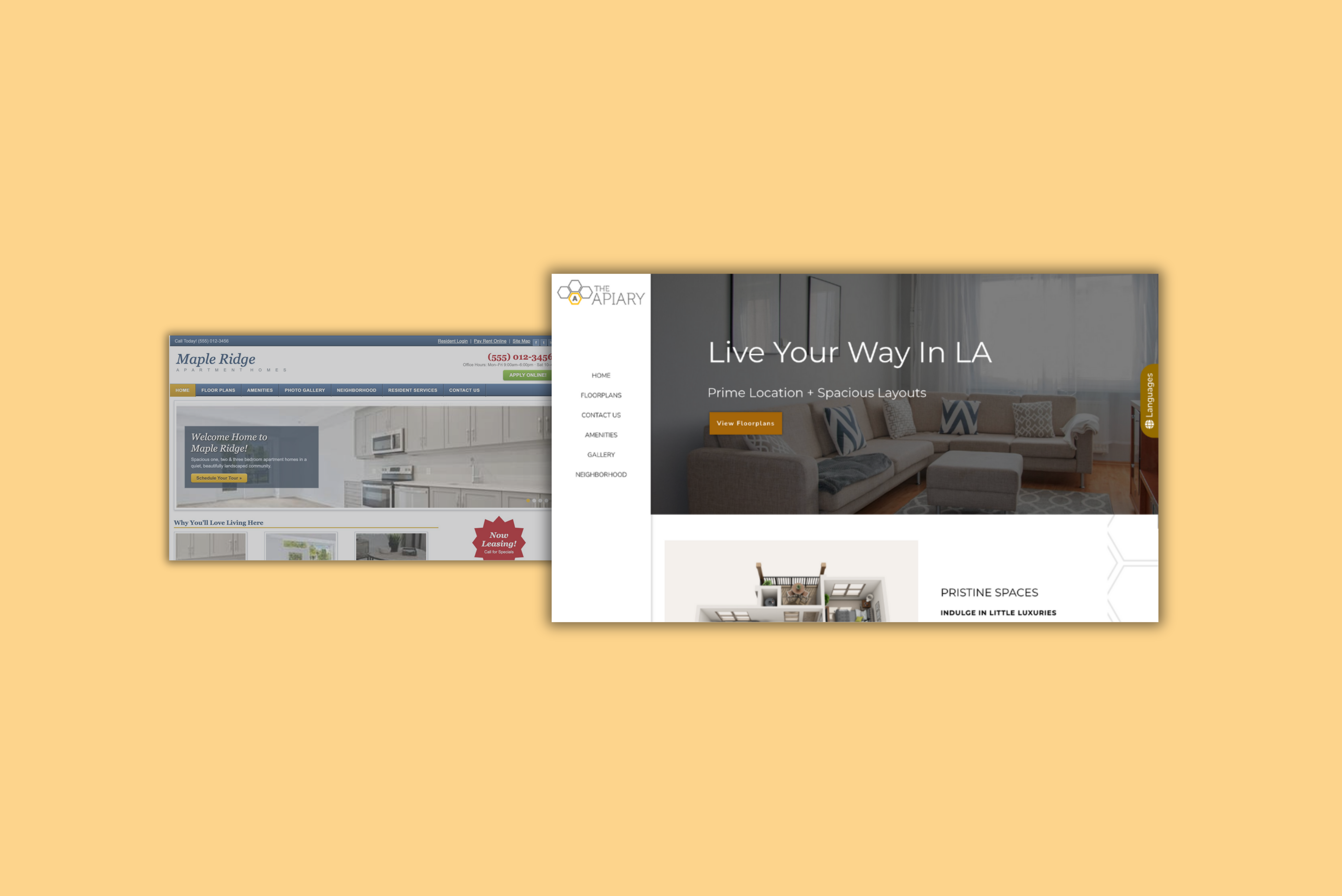
We already have a website. Isn’t that enough? Most community websites are built to describe the property, not to capture search. H.E.L.P. pages are built specifically around what renters type into Google, which is a different job than a homepage and floor plans page do.