Are you renting demand, or building something you own?
Listing-site spend is rented traffic. The moment the payment stops, so do the leads.
A strong property website and a local search footprint work differently. They stay attached to the property and keep bringing renters to you directly. That makes them closer to an improvement to the asset than to this month’s operating cost.
What owning your traffic looks like
A website that works
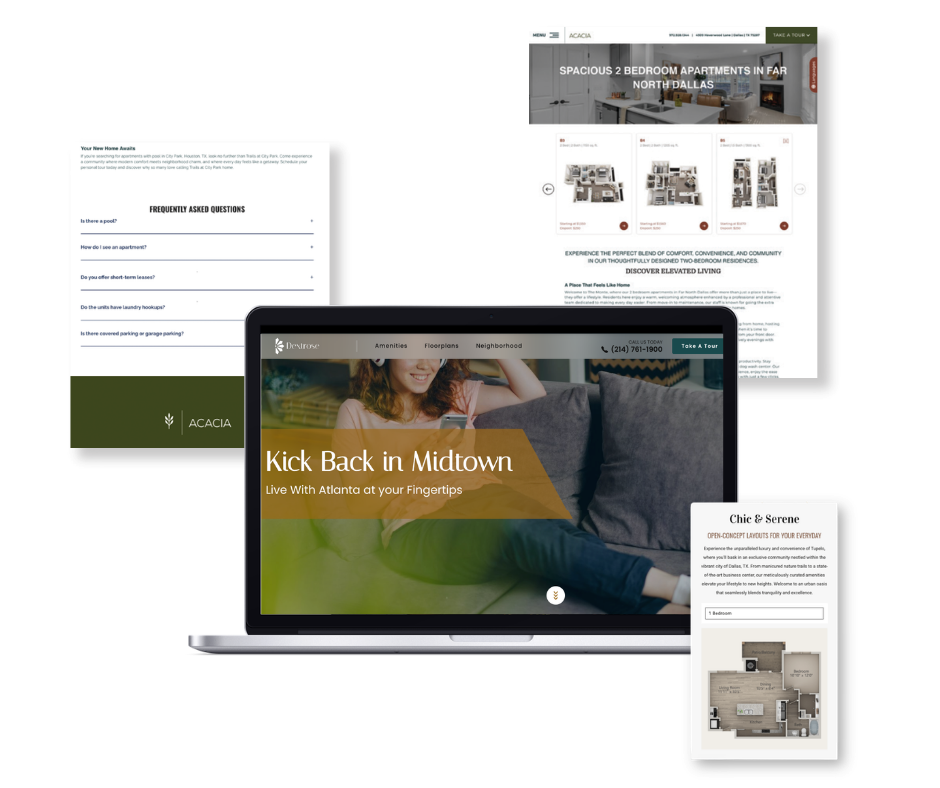
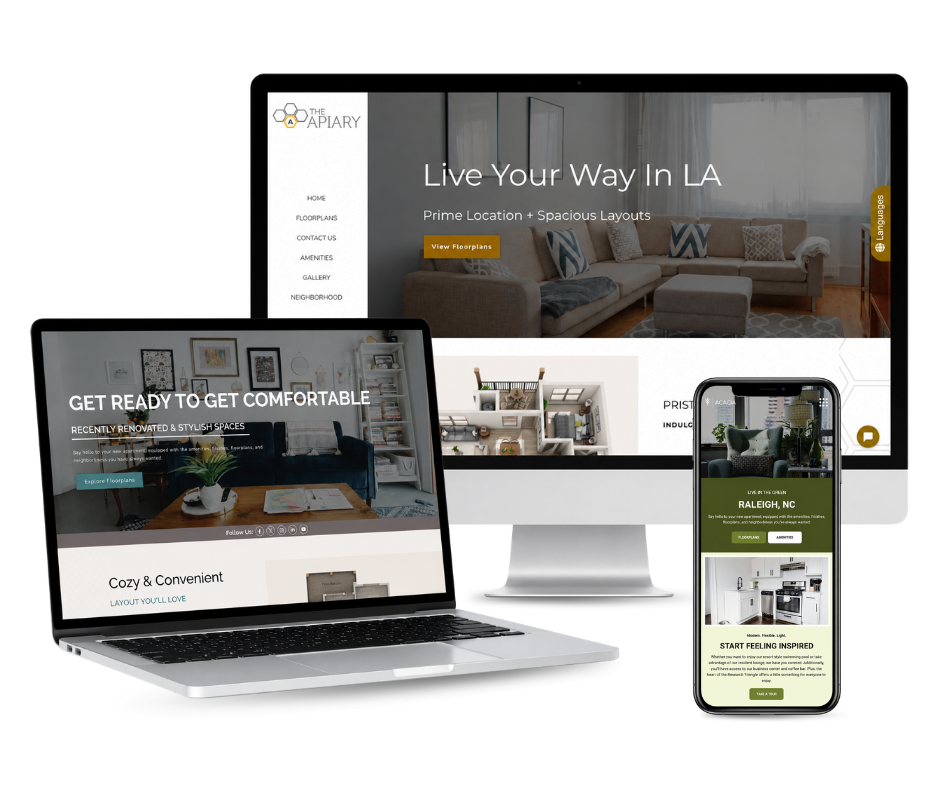
A fast, mobile-friendly property website with current pricing and availability pulled from your property management software.
Local search you own
Search360 helps your community show up when renters search near the places they work, study, and live, in Google, Maps, and AI answers.
Results you can show
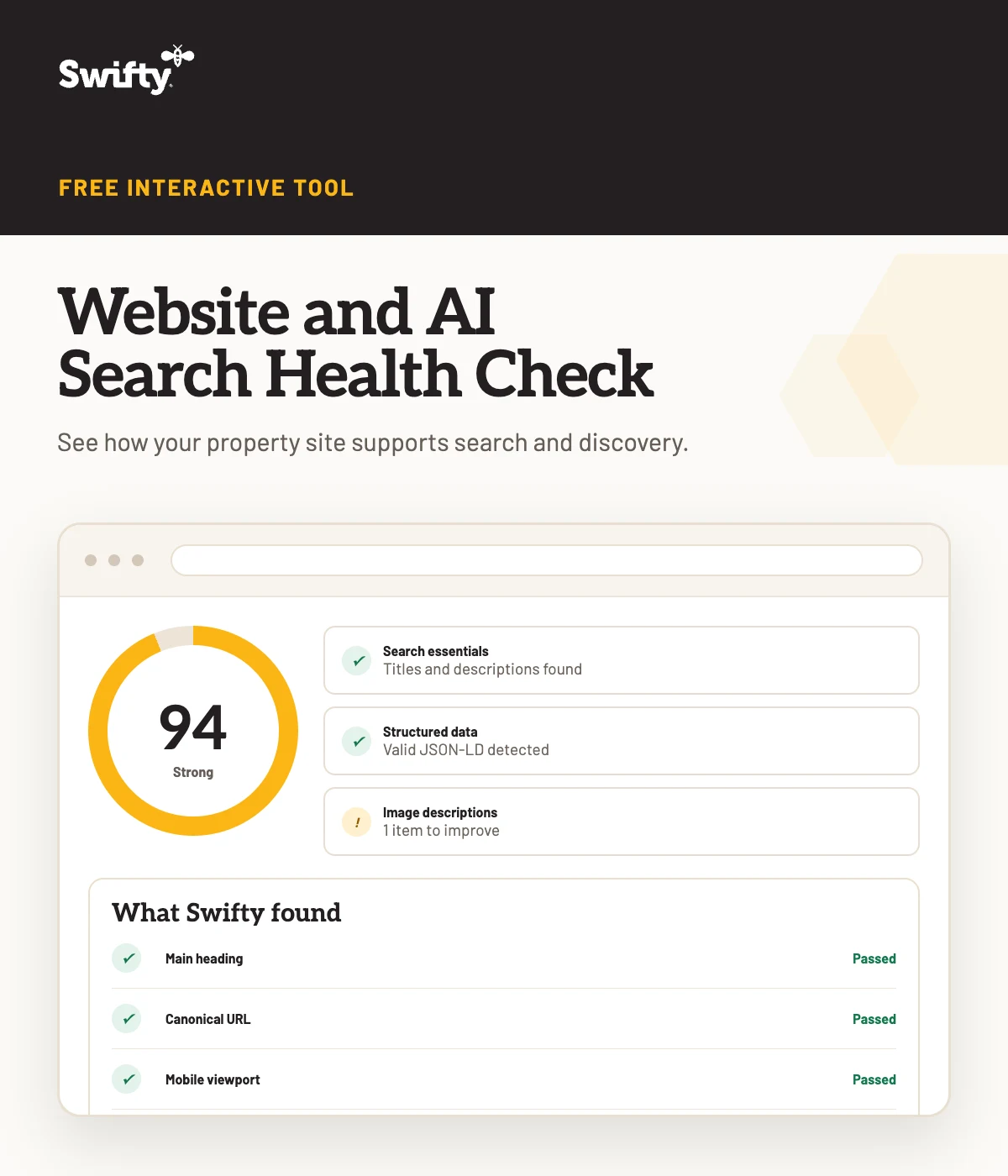
Simple reporting on search, traffic, and leads, so you can see what the marketing budget is producing.
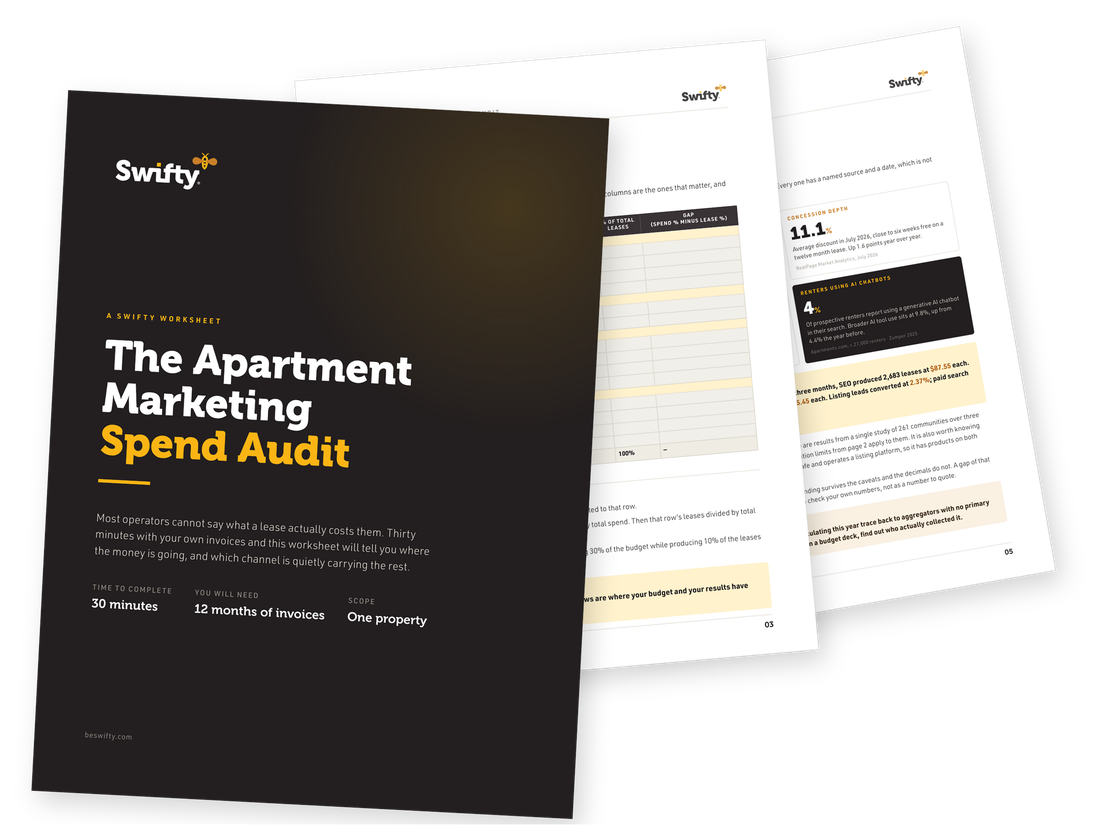
In one study by Reach by RentCafe of 261 apartment communities over three months (March 2023), a signed lease cost about $88 through SEO and about $1,005 through an ILS. Every market is different, but the direction is clear.
Why it holds up when budgets tighten
When budgets freeze, rented traffic is usually the first thing cut, and leads drop with it. Owned channels keep working because they compete with other improvements to the property, not with this month’s bills.
- Builds value that stays with the property
- Reduces reliance on listing sites over time
- Gives ownership simple numbers to review
- Works alongside the listing sites you keep
Questions We Hear a Lot
How is apartment SEO different from traditional local SEO?
Apartment SEO is more competitive and more intent-driven than traditional local SEO. Instead of ranking for one service keyword, apartment communities must compete across dozens of renter searches tied to location, lifestyle, price, amenities, and proximity. Successful multifamily SEO focuses on hyper-local relevance, property-specific content, and renter intent, not just city-wide keywords.
Why don’t my property pages rank even though we’re spending on ILS ads?
ILS ads don’t improve your organic rankings. In many cases, they actually compete with your own website for visibility. Google prioritizes websites that demonstrate location authority, original content, and strong user engagement, signals that ILS listings don’t pass through to your property site.
What keywords actually matter for apartment communities today?
The most valuable keywords are intent-based, not generic. These include: “apartments near [landmark / employer / neighborhood]” “pet-friendly apartments in [area]” “2 bedroom apartments near [school or district]” “luxury apartments with [amenity] in [location]” Modern apartment SEO focuses on search themes, not single keywords.
How long does SEO take to work for multifamily properties?
Most properties begin seeing measurable improvements within 60 to 120 days, depending on market competition and content depth. SEO compounds over time (unlike ads), meaning visibility, traffic, and leads continue to grow without increasing spend.
What is hyper-local SEO and why does it matter for apartments?
Hyper-local SEO targets specific neighborhoods, landmarks, employers, and lifestyle zones instead of broad city terms. Renters don’t search by ZIP code. They search by where they live their life. Hyper-local pages help your property show up for these high-intent searches and dramatically increase qualified traffic.
See what owning your traffic could look like
We will look at one of your properties and show you where owned search could take over from rented leads.