


Count the line items on your marketing budget. Now count the hours.
One of those numbers lives on a spreadsheet. The other quietly eats your team’s week, and it never shows up on a single invoice.
The Hours Nobody Puts on a Proposal
Every marketing tool has a price you can see: the subscription, the ad spend, the agency retainer. What no one quotes you is the labor it takes to run the thing. The small website edits. The pricing update that has to happen in four places. The Friday report stitched together by hand. The back and forth with vendors who do not talk to each other.
That is the real cost of running your own marketing, and for a busy leasing team it is the biggest one.
Take just your property website. Add up a normal month: content and photo changes, keeping the site fast and found in search, updating pricing and availability, pulling reporting, and coordinating whoever built the thing. For a single property, that lands at roughly 16 hours a month. Not strategy. Not campaigns. Just keeping the lights on.
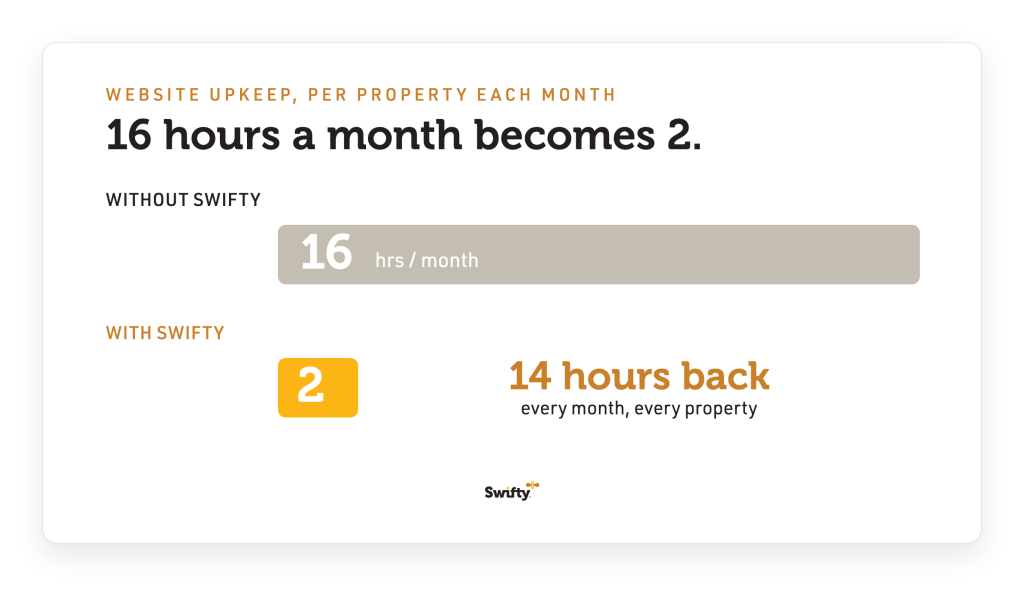
At the average pay for a property marketing manager, about $51 an hour, those 14 hours are worth close to $8,600 a year, per property. Multiply by a portfolio and the hidden hours stop being an annoyance and start being a budget.
Two Clocks Are Running (you watch the wrong one)
Here is what most time comparisons miss. There are two clocks running, and the one everybody watches is the smaller one.
The first clock is team hours: how long a task takes your people. That is the number above, and it matters.
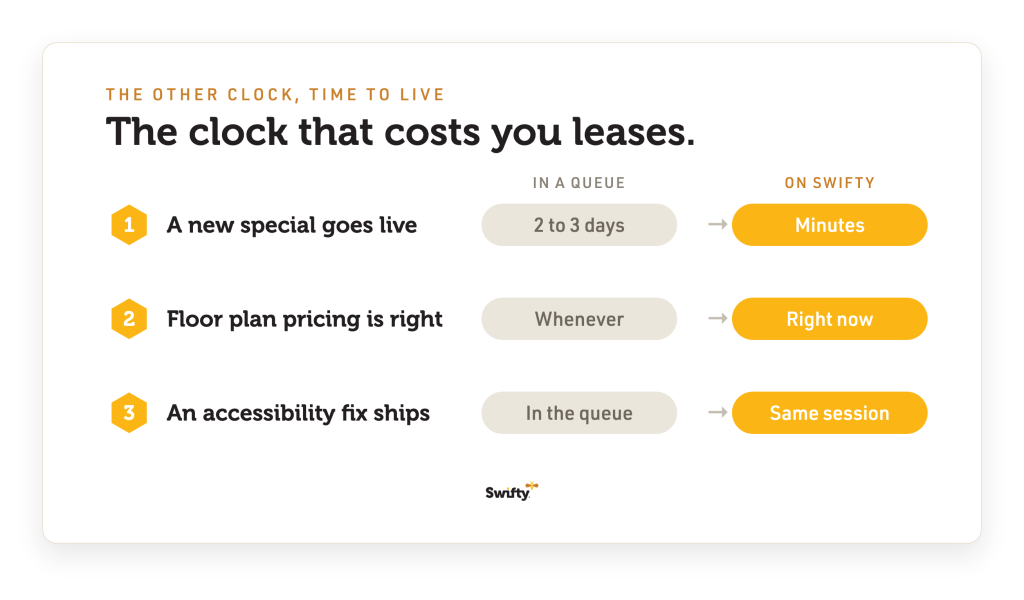
The second clock is time to live: how long the wrong information stays public before someone fixes it. A special that is stale for three days is three days of renters seeing the wrong offer. A price that is off until the vendor gets to your ticket is a week of the wrong leads. That clock does not cost you hours. It costs you leases.
A connected platform changes that math, because the fix happens where the work lives:
- Pricing never waits. PriceSync Pro pulls live numbers straight from your PMS, so your floor plans page is right the moment your rates are.
- A change is just a sentence. Tell Emily, in plain English, to add a special, edit content, or fix an accessibility issue, and it goes live in minutes, not the two to three days a ticket queue takes.
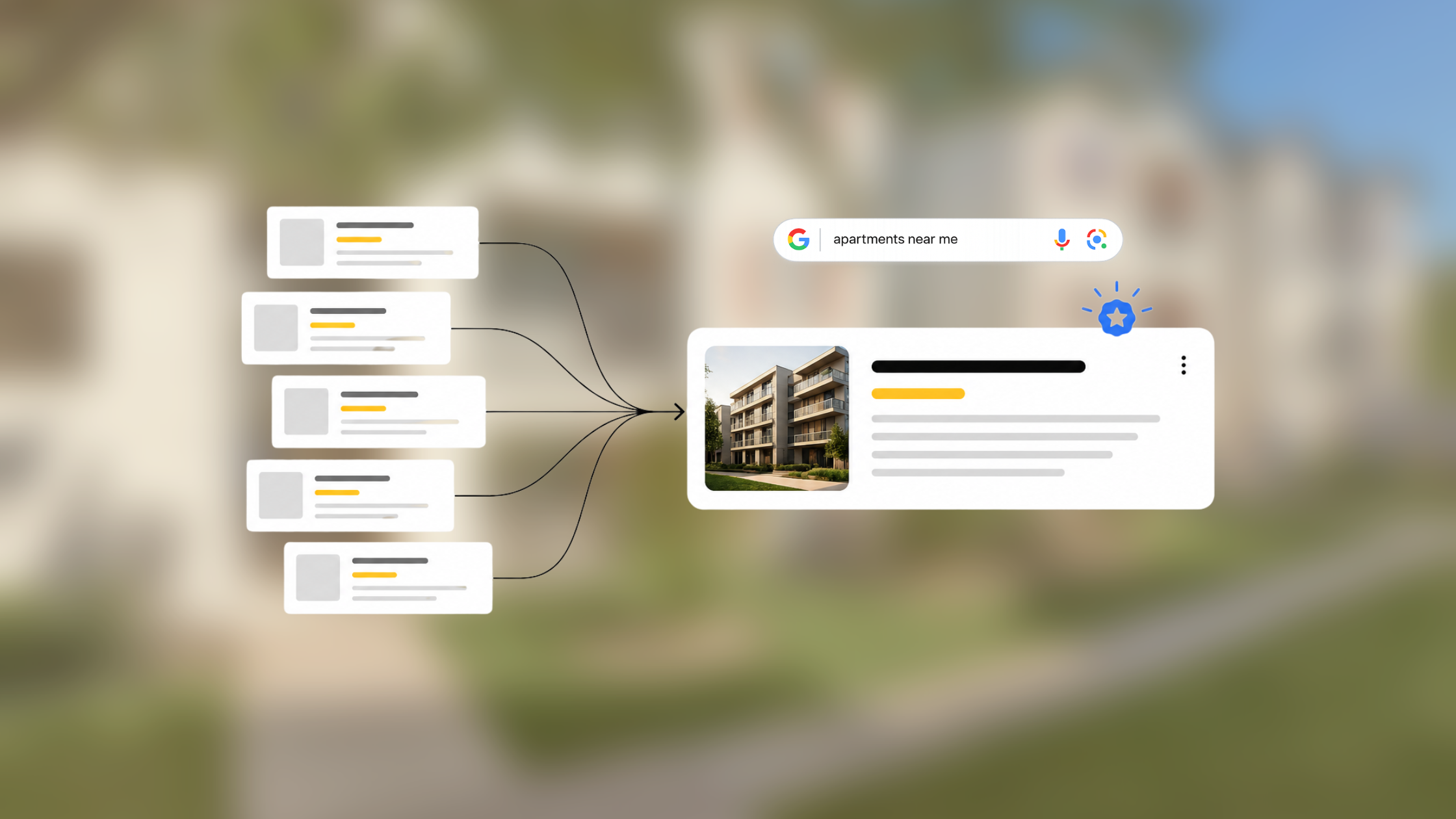
- Search stays handled. Algorithm Intelligence tracks and applies Google and AI platform changes, so you are not finding out when your rankings slip.
The Switch Everyone Overestimates
There is one more hidden hour count, and it is the one that keeps teams stuck: the belief that moving to a better website is a huge time commitment.
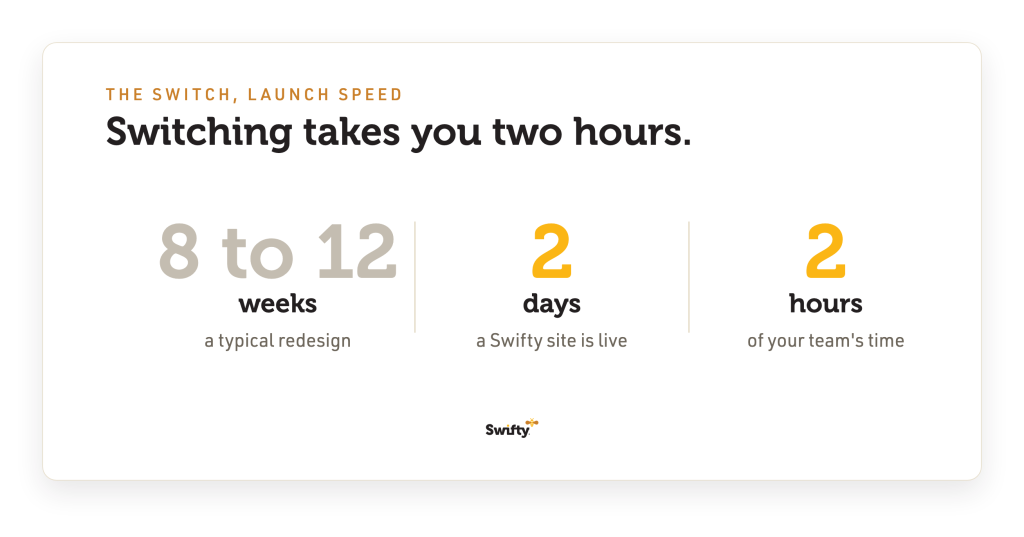
The industry number backs up the fear. A typical small business redesign runs 8 to 12 weeks, and about 65% of redesigns miss their estimate. The single biggest reason for the delay is late client content, the logos, photos, and copy the agency is waiting on. In other words, the thing that stalls most website projects is the part that lands on your desk.
Swifty removes exactly that part. Your existing content and photos migrate automatically. Your team brings three things to one kickoff meeting: logo files, floor plans, and domain access. From there, a site can go live in as little as two days, on about two hours of your team’s total time.
One honest note, because you will ask a technical person and they will ask you: search rankings often dip briefly during any migration before they recover. That is normal, it is expected, and handling it is our job, not yours.
What You Would Do With the Hours Back
Fourteen hours a month is not an abstraction. It is a full leasing day and a half. It is tours booked, applications followed up, residents retained, a plan for next quarter that actually gets written instead of pushed.
And a platform should do more than take chores off your plate. It should give you capability you never had time to build. Swifty’s local pages, for example, are not a task we removed from your week. They are a set of pages capturing renter searches that your team was never going to hand build in the first place. That is the difference between saving time and gaining ground.
How Swifty Gives the Time Back
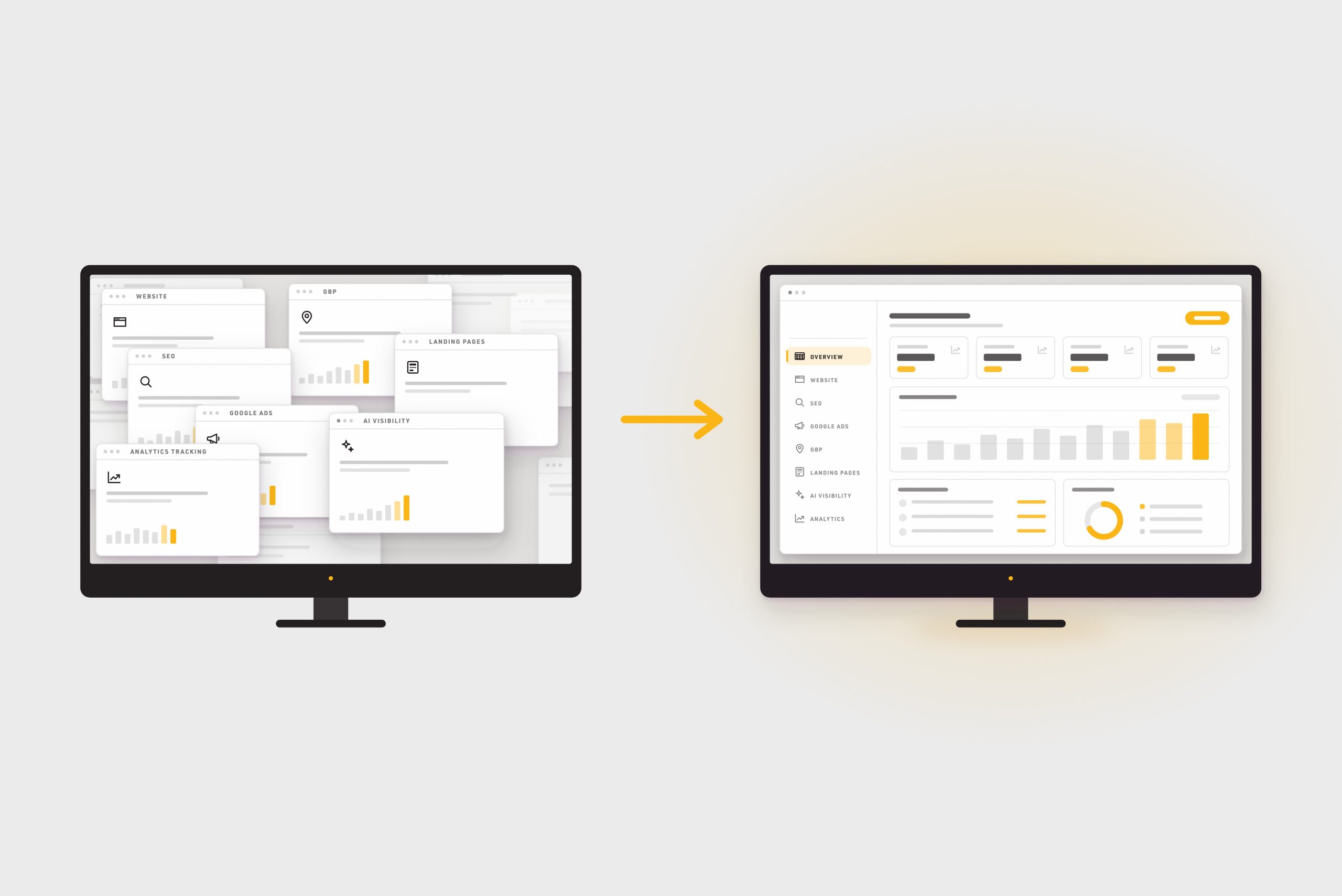
The reason the hours drop is not magic, it is consolidation. One connected platform instead of a pile of disconnected vendors:
- Emily, your built in assistant. Ask for a change in plain language, a new special, a content edit, an accessibility fix, and it happens in minutes.
- Live pricing that never goes stale. PriceSync Pro pulls your rates and availability straight from your PMS, so your floor plans page is right the moment your PMS is.
- Automatic content migration. Your current site’s content and photos come over on their own, so a launch does not wait on your inbox.
- One dashboard for reporting. Found, chosen, and converted in a single view, instead of a Friday spent stitching four logins together.
- One team that owns the outcome. No more coordinating between the website vendor, the SEO agency, and whoever runs the ads.

The Return, Before a Single New Lease
Recovered labor is the honest floor of this argument, because it does not depend on winning one extra tour. At $51 an hour, fourteen hours a month is about $717 back per property, per month, or roughly $8,600 a year. Set that against what a platform like this costs to do the work, and most properties land at about a 2.6x return in year one and 3.6x every year after, before you count a single additional lease.
The Bottom Line
The most expensive part of your marketing is not a line item. It is the quiet hours your team spends holding a stack of tools together, and the days your community loses waiting on someone else’s queue.
Swifty gives both back: roughly 14 hours a month per property on upkeep, and a switch that takes two hours instead of two months. Time your team can finally spend filling units instead of maintaining the machine that is supposed to.
FAQ
Where does the 16 hours a month come from? It is the labor to run one property website in a normal month: content and photo changes, SEO and AI visibility upkeep, pricing and availability updates, reporting, and vendor coordination. Every task is counted at the conservative end, priced the same for both the manual way and Swifty, so only the labor differs.
Does saving time mean giving up control? No. You still decide what changes and when. You just make the change by asking, in about a minute, instead of filing a ticket and waiting days for someone else to do it.
Is a two day launch realistic for my property? It is the fast path, and it depends on one thing: arriving at the kickoff with your logo files, floor plans, and domain access. Your existing content and photos migrate automatically, which is why the timeline collapses from weeks to days.
What happens to my search rankings when I switch? Rankings commonly dip for a short stretch during any migration, then recover. It is expected, and managing the search migration is part of what Swifty handles for you.